
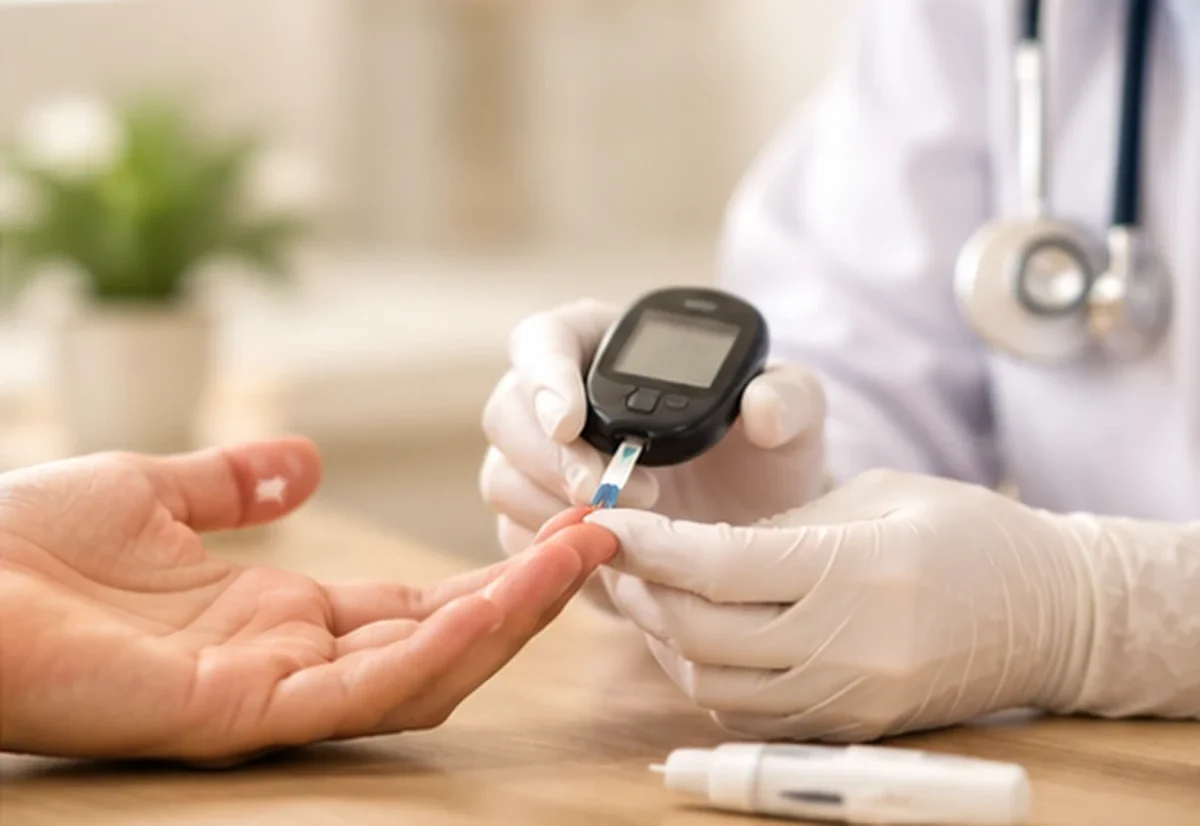
The HbA1c test is a blood test that helps show your average blood glucose (blood sugar) level over approximately the previous two to three months. It is different from a single finger-prick or glucose-monitor reading, which reflects your level at a particular time.
Healthcare professionals may use HbA1c as part of an assessment for diabetes or prediabetes, or to monitor diabetes management over time. The result is one part of the overall clinical picture and should be interpreted alongside your medical history, symptoms and other test results.
What does HbA1c measure?
Glucose in the bloodstream attaches to haemoglobin, a protein in red blood cells. The HbA1c test measures the proportion of haemoglobin with glucose attached. Because red blood cells circulate for a period of time, the result offers an indication of glucose exposure over several weeks rather than a snapshot of one moment.
Why might a clinician recommend an HbA1c test?
Your healthcare professional may recommend this test if you have risk factors for diabetes, symptoms that warrant investigation, a previous result that needs follow-up, or an established diabetes diagnosis that requires monitoring. It may also be used alongside other checks when reviewing an overall metabolic-health plan.
Testing decisions depend on individual circumstances. A clinician can explain why the test is appropriate for you and whether other blood tests are needed.
Do you need to fast before the test?
An HbA1c test by itself generally does not require fasting. However, if your clinician has ordered other tests at the same appointment, those tests may have different preparation instructions. Follow the instructions given by your clinic or laboratory rather than assuming that no preparation is needed.
How should you understand your result?
Your result is usually reported as a percentage or in a standardised unit, depending on the laboratory. Reference ranges and diagnostic thresholds should be interpreted by a qualified healthcare professional using the applicable clinical guidance.
A result outside the expected range does not tell the whole story on its own. Depending on the circumstances, a clinician may recommend repeat testing, additional investigations or a discussion of lifestyle, medication and follow-up. Some conditions affecting red blood cells, certain forms of anaemia, pregnancy and other factors can affect how an HbA1c result is interpreted. Tell your clinician about relevant health conditions and medicines.
HbA1c and day-to-day glucose readings
HbA1c and home glucose monitoring provide different information. HbA1c reflects a longer period, while a glucose meter or continuous glucose monitor can help show shorter-term patterns and changes. When used together as appropriate, the results can support a more informed discussion about a person’s care plan.
Do not adjust prescribed diabetes medication based on an HbA1c result or online information alone. Discuss the result with your healthcare team and ask what it means for your individual treatment goals.
Questions to ask at your appointment
- Why has this test been recommended for me?
- What does my result mean in the context of my other health information?
- Do I need another test or a repeat measurement?
- How often should my glucose or HbA1c be monitored?
- Should my current treatment or follow-up plan change?
When should you seek medical advice?
Arrange a medical appointment if you have concerns about a test result, have risk factors for diabetes, or notice symptoms such as increased thirst, frequent urination, unexplained weight changes or unusual tiredness. These symptoms can have several causes, so assessment is important rather than attempting to diagnose yourself.
Discuss your results with a healthcare professional
If you have questions about blood glucose testing or diabetes risk, contact Medwin Medical Center to ask about the appropriate consultation or assessment available. Your clinician can help interpret results and advise on suitable next steps.
Further Reading
- American Diabetes Association — Understanding A1C
- American Diabetes Association — Diabetes Diagnosis
This article is for general education and does not replace medical advice, diagnosis or treatment. Testing and interpretation should be guided by a qualified healthcare professional.