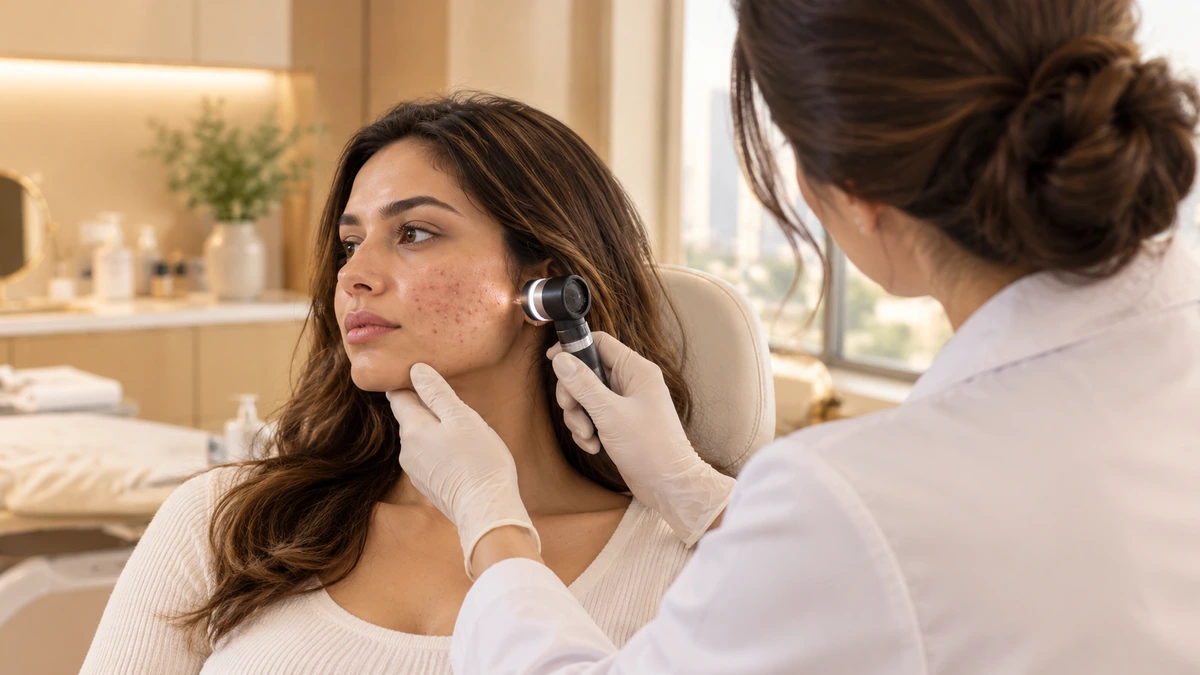
Acne is often associated with the teenage years, but it can affect adults too. Some people continue to experience breakouts into their 30s, 40s and beyond, while others develop acne for the first time as adults. Breakouts may be frustrating when they persist, leave marks or do not improve with over-the-counter skin-care products.
Understanding the possible contributing factors is a useful first step. At Medwin Medical Center in Dubai, a dermatology consultation can help assess your skin concerns and discuss suitable options according to your symptoms, skin type and medical history.
What is adult acne?
Acne develops when hair follicles become blocked and inflammation occurs. It may appear as blackheads, whiteheads, inflamed pimples or deeper, painful lumps. Adult acne can affect the face, jawline, chest, back and other areas where oil glands are present. Its pattern and severity vary, so treatments that help one person may not be appropriate for another.
Acne is not simply a sign of poor hygiene. Scrubbing the skin aggressively can irritate it and make symptoms harder to manage.
What can contribute to adult acne?
Hormonal changes
Hormonal fluctuations can influence oil production and contribute to breakouts. Some women notice changes around their menstrual cycle, pregnancy, perimenopause or menopause. Acne alone does not automatically mean that a person has a hormone disorder; other symptoms and the clinical history help determine whether further assessment is appropriate.
Family history
Genetics can influence a person’s tendency to develop acne and the way their skin responds to other triggers.
Skin-care and hair-care products
Some cosmetics, moisturisers, sunscreens and hair products can contribute to blocked pores in people who are susceptible. Products labelled non-comedogenic or oil-free may be worth considering, although individual responses vary.
Medicines and other health factors
Certain medicines can cause or worsen acne-like breakouts, and some other skin conditions may look similar. Do not stop a prescribed medicine on your own. If you suspect a medicine is affecting your skin, speak with the clinician who prescribed it or arrange a dermatology assessment.
How is adult acne assessed?
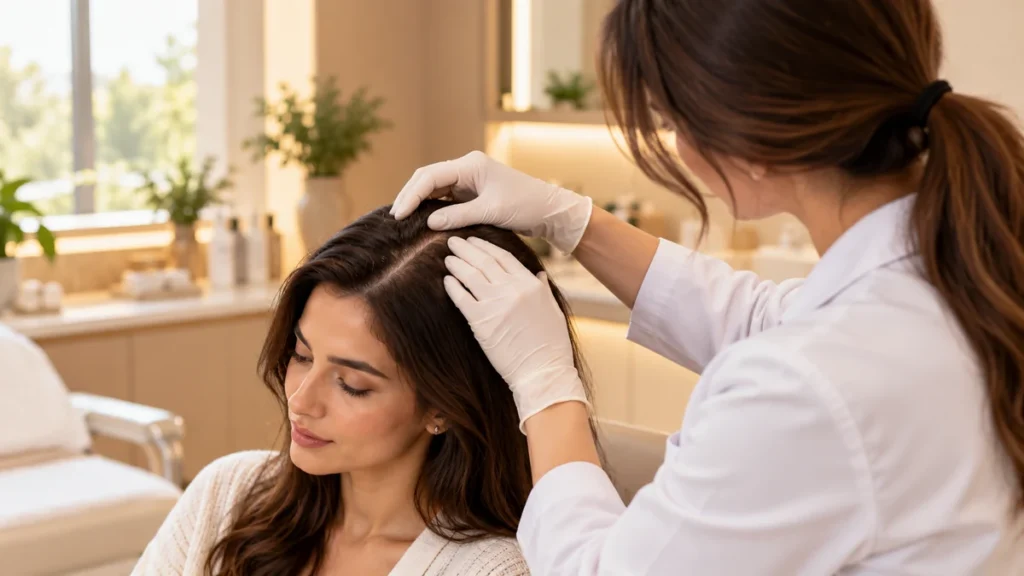
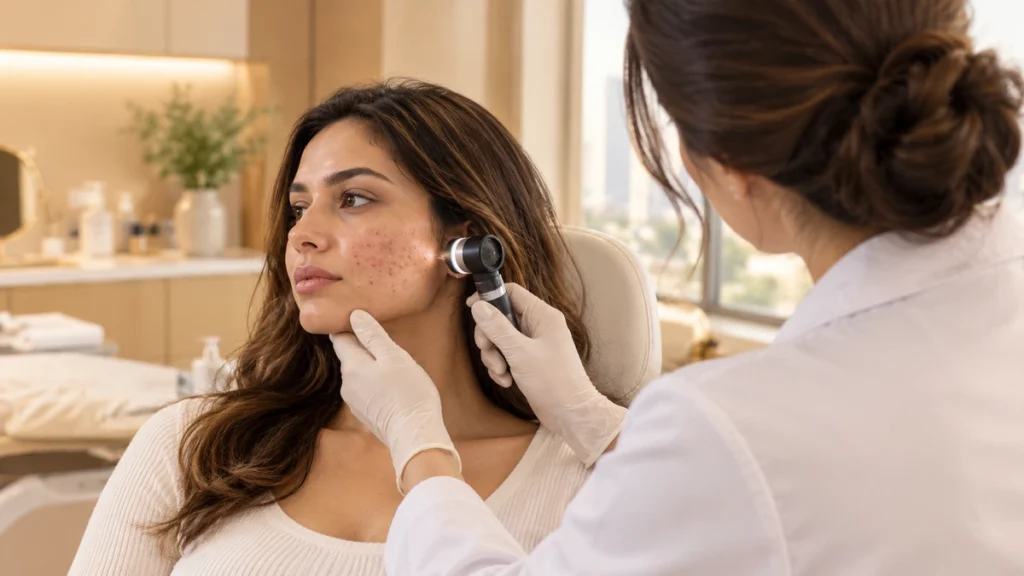
A dermatologist may ask when the breakouts started, where they occur, what products and medicines you use, and whether you have noticed patterns or other symptoms. They will examine the skin and consider the type and severity of the acne. Additional tests are not needed for everyone but may be considered when the history or examination suggests another contributing condition.
What treatment options may be discussed?
The right plan depends on the type of acne, severity, pregnancy considerations, medical history and prior treatments. Depending on the assessment, options may include topical medicines, prescription treatments for persistent or inflammatory acne, or other treatments selected by the clinician. A simple skin-care routine may also support the plan.
Some treatments need consistent use over several weeks before improvement becomes noticeable. Follow the instructions given by your healthcare professional and report irritation, side effects or a lack of improvement. Do not start prescription medicines or combine multiple strong active products without appropriate advice; some treatments are unsuitable during pregnancy or when planning pregnancy.
Everyday skin-care habits
- Cleanse gently and avoid aggressive scrubbing.
- Choose products that are suitable for acne-prone skin.
- Avoid picking or squeezing spots, which can increase inflammation and the risk of marks or scars.
- Keep your routine consistent rather than frequently switching products.
- Use sun protection appropriate for your skin and follow your clinician’s advice.
These steps can support skin care, but they do not replace medical treatment when it is needed.
When should you see a dermatologist?
Consider a consultation if breakouts persist, lesions are deep or painful, acne leaves scars, non-prescription products have not helped, or your skin is becoming irritated by products. Seek advice if acne is affecting your confidence or quality of life, or if you suspect that a medicine or another health concern may be contributing.
What happens at a Medwin dermatology consultation?
Your consultation can include a discussion of your concerns, skin-care routine, medical history and treatment goals, followed by a skin examination. The clinician can explain suitable options, expected timeframes, possible side effects and follow-up needs. The plan should be based on an individual assessment rather than a one-size-fits-all approach.
Learn more about Dermatology at Medwin Medical Center or contact the clinic to enquire about an appointment.
Frequently asked questions
Can adults develop acne for the first time?
Yes. Acne can continue beyond adolescence or begin for the first time during adulthood. Possible contributing factors differ from person to person.
Does adult acne always mean there is a hormonal problem?
No. Hormonal changes are one possible factor, but acne can have several contributors. A clinician can assess whether further evaluation is appropriate.
How long does acne treatment take to work?
The timeframe depends on the treatment and the individual. Many treatments require consistent use for several weeks. Follow the agreed plan and attend follow-up appointments when recommended.
Can acne leave scars?
Inflammatory acne can sometimes cause scarring. Seeking advice for persistent, deep or painful lesions may help the clinician discuss ways to reduce the risk of longer-term skin changes.
Medical information notice: This article is for general educational purposes and is not a diagnosis or individual treatment recommendation. Please consult a qualified healthcare professional about your own symptoms.